
NATO Signals Intent to Expand Maritime ISR Capability with Northrop Grumman's MQ-4C Triton
PRESS RELEASE
Northrop
7/8/20261 min read
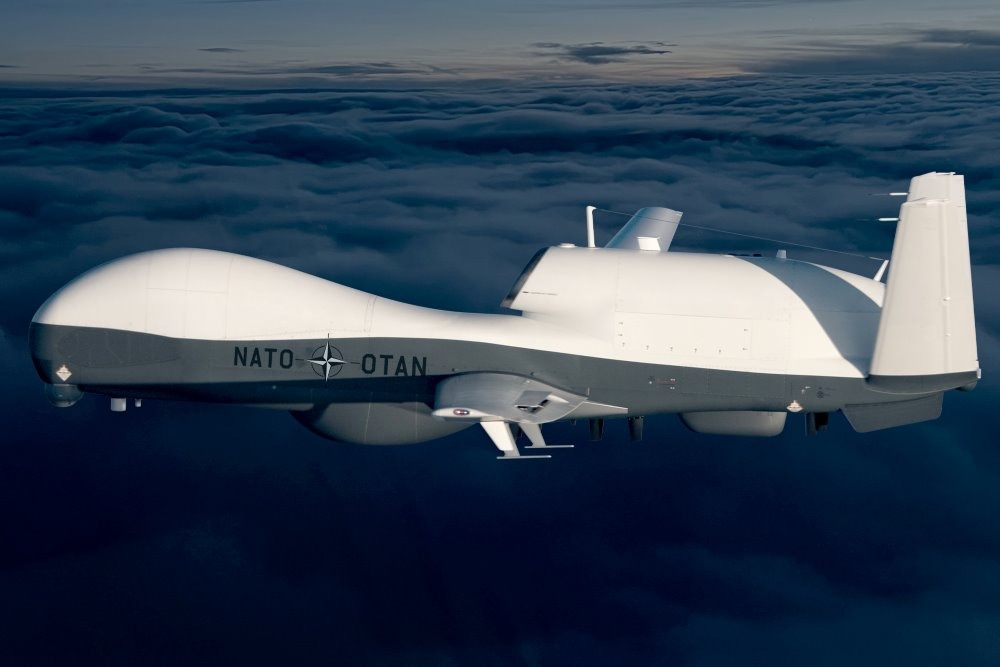
NATO has signed a Letter of Intent (LOI) to expand its Intelligence, Surveillance, and Reconnaissance (ISR) Force by pursuing acquisition of Northrop Grumman’s MQ-4C Triton aircraft. This action signals NATO's commitment to enhance allied maritime security and situational awareness.
Four nations signed the LOI at the NATO Summit Defense Industry Forum.
Working closely with NATO, the U.S. Navy and trans-Atlantic industrial partners, Northrop Grumman (NYSE: NOC) would build and deliver the aircraft. Key European industry partners would deliver components of the ground station and supporting data processing infrastructure.
NATO has operated Northrop Grumman's RQ-4D Phoenix (Global Hawk variant) from Sigonella, Italy, providing commanders with vital ISR data that informs joint decision making.
MQ-4C Triton adds unmatched maritime surveillance capabilities and operates collaboratively with crewed platforms across domains through the intelligent, timely exchange of data. It complements the Phoenix fleet by expanding NATO’s organic ISR assets, enhancing surveillance coverage across the alliance’s northern, eastern, and southern flanks. Given its lineage to the Global Hawk family of aircraft, Triton offers opportunities to leverage cost-saving synergies in operations, maintenance and training with the existing Phoenix fleet.
Program Details:
Built for the U.S. Navy and the Royal Australian Air Force, the multi-intelligence MQ-4C Triton supports missions including maritime patrol, signals intelligence and search and rescue. It delivers unmatched persistent surveillance that anticipates adversary behavior, enabling better planning and joint military responses. Triton builds upon Northrop Grumman's autonomy and high-altitude, long-endurance (HALE) leadership to provide unmatched maritime surveillance capabilities.